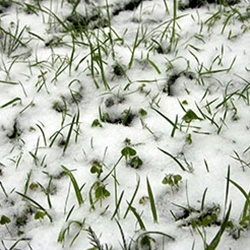
Lawns are often damaged during the winter by voles and snow mold. You can take steps to prevent damage to your yard this season.
Voles eat grass blades and roots and make runways, or windy trails of damaged grass, in lawns under snow. Voles, also known as meadow mice, are four to six inches long and a brownish-gray color. The damage they cause is often blamed on moles, but moles are not active in the winter and tunnel below the surface of the soil.
Lawns usually fill in during the spring, but in cases of severe damage overseeding may be required. You can prevent damage from voles by mowing your grass until it is completely dormant and cutting it to a height of two inches at the last mowing. Remove any excessive vegetation that could provide cover for voles.
Snow mold can also cause damage to lawns in the winter and lead to matted, crusty-looking areas in early spring. Snow mold will generally disappear as the grass dries out, but it can leave behind weak or dead turf.
The severity of snow mold can vary from year to year. Some parts of a lawn may be affected more than others. Excessive use of fast-release water-soluble nitrogen fertilizer in early to mid fall, excessive thatch, excessive amounts of shade, poor drainage, and excessive amounts of debris, such as leaves or straw, can contribute to snow mold. Areas with piles of snow are also more likely to be affected by snow mold.
You can prevent snow mold by using slow-release or controlled-release nitrogen fertilizer. Make sure the soil has adequate levels of phosphorus and potassium. You can manage thatch through aerification or dethatching. Make sure drainage is adequate. Prune or remove dense vegetation bordering problem areas to improve air circulation. Continue to mow your lawn until it is completely dormant in the fall.

