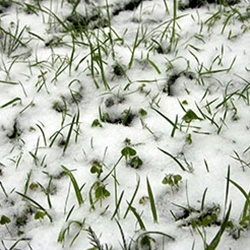
Now that colder weather has arrived, you may wake up some mornings and find frost on your lawn. Frost can cause damage to grass, especially if you walk on it while the blades are frozen. Fortunately, there are some steps you can take to prevent or treat damage to your lawn caused by frost so it will be lush and green in the spring.
Watering your lawn regularly is one of the best ways to prevent frost damage. Water your lawn less frequently but more thoroughly so that the roots will need to reach down into the soil for water before the next watering. Water thoroughly shortly before a predicted frost. This will warm the soil and allow the grass to self-regulate the amount of water it absorbs. Never water grass or run equipment on it if it is frozen or covered with frost.
Providing your lawn with adequate nutrients can keep it healthy all year. Use a higher than normal amount of pot ash before winter to help with root health and growth. This will help the grass withstand damage from the cold.
If your grass has already been damaged by frost, you can revive it and restore it to its former healthy condition. Your lawn will not recover from frost immediately. It should look better within two to four weeks after temperatures become moderate.
Water your lawn with ¾ inch of water per application. Set up your irrigation system and put a catch basin, such as a large cup, on the lawn. See how long it takes to fill it ¾ inch and set your irrigation timer for that amount of time. Different sections of your lawn may need different amounts of watering time.
After being damaged by frost, your lawn is stressed and needs fertilizer. Use low or no nitrogen to avoid burning the lawn and turning it brown. Use fertilizer with more nitrogen when the weather is warmer.
If there is serious damage, you may need to re-sod those areas. St. Augustine can be plugged or sod in the spring. Bahia will often recover on its own. If it does not, it can be over-seeded. Wait until May or June, when the nighttime temperature is 60 degrees Fahrenheit or higher. Zoysia and Centipede generally have fewer winter problems.
After making repairs, completely cover the ground. This will prevent problems with weeds later.

